
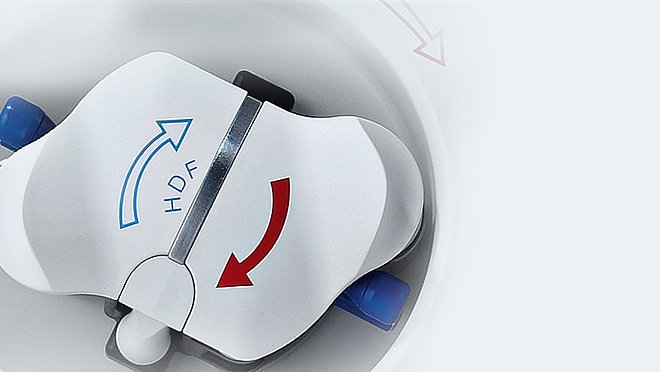
HighVolumeHDF® as easy as HD.

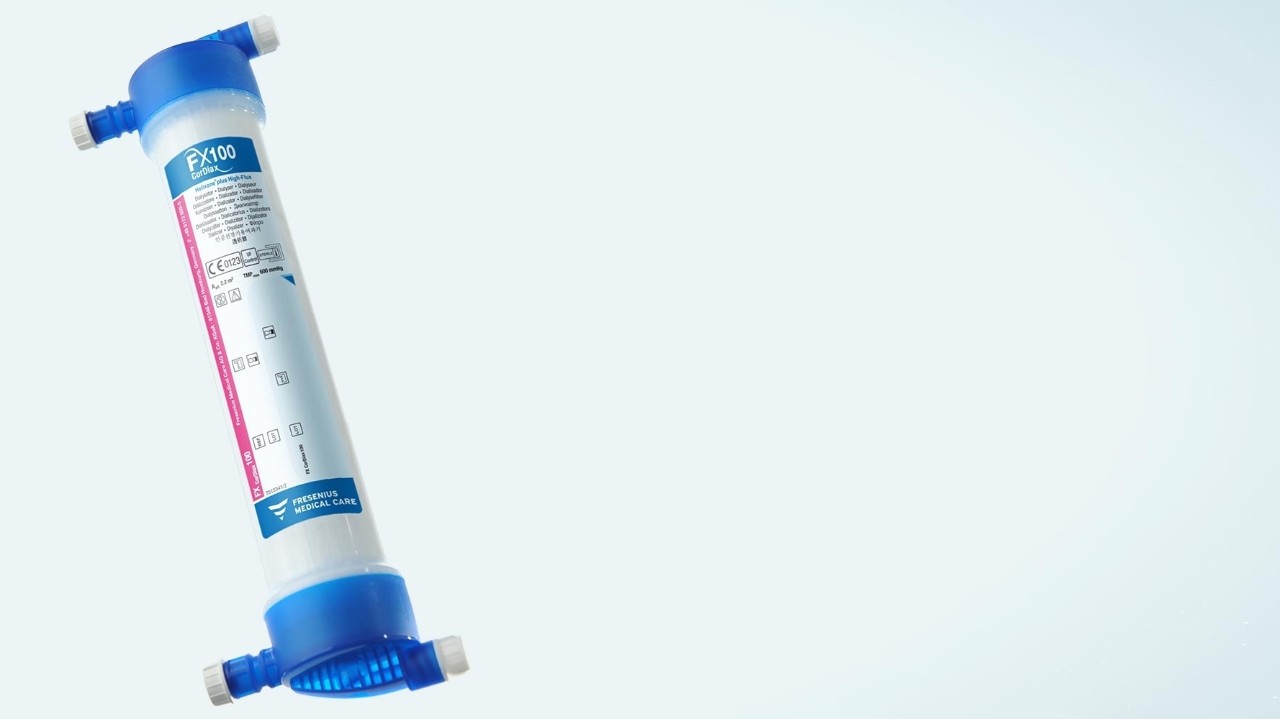
The FX CorDiax is the most efficient dialyser within the FX class®. The core of the FX CorDiax is the Helixone® plus membrane, a targeted enhancement of the Helixone® membrane.
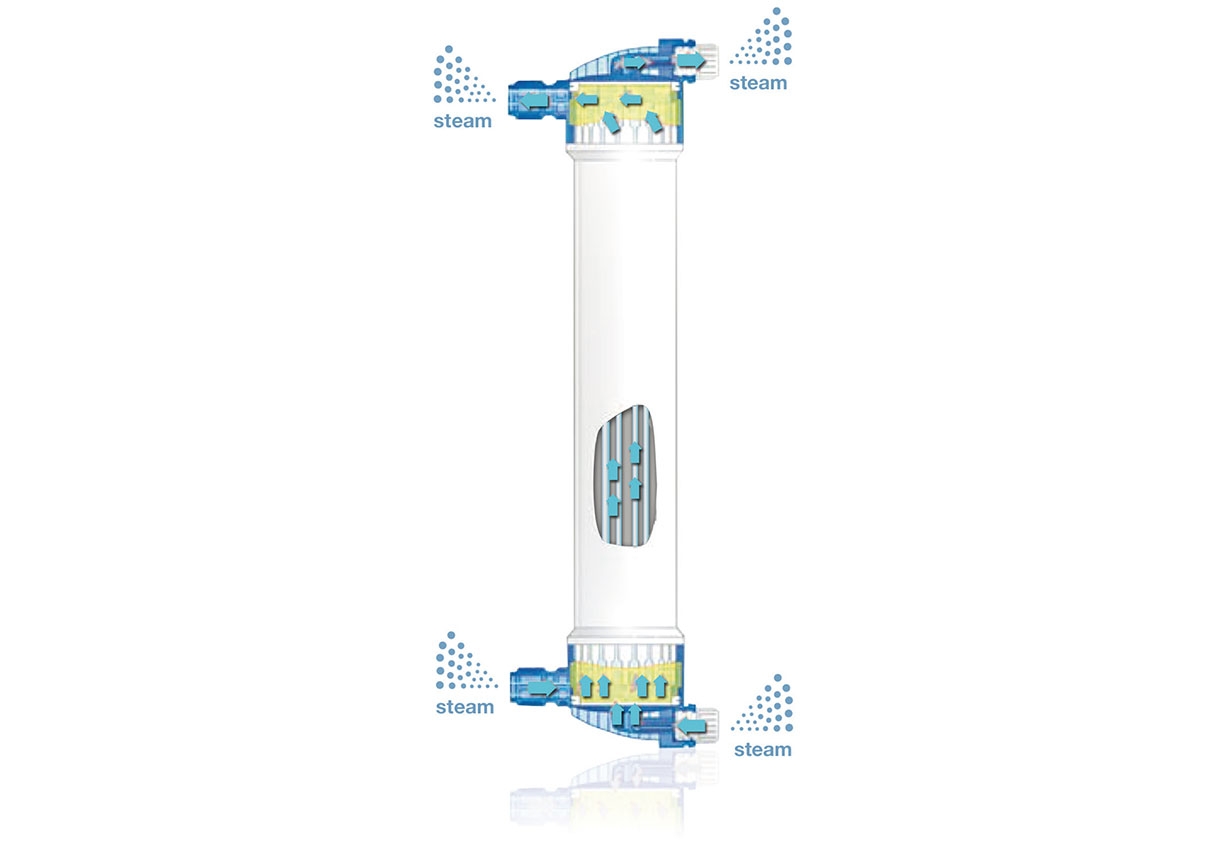
New production technology combined with INLINE steam sterilisation, allows for crucial enhancements of membrane porosity, reducing flow resistance and improving transport across the membrane.
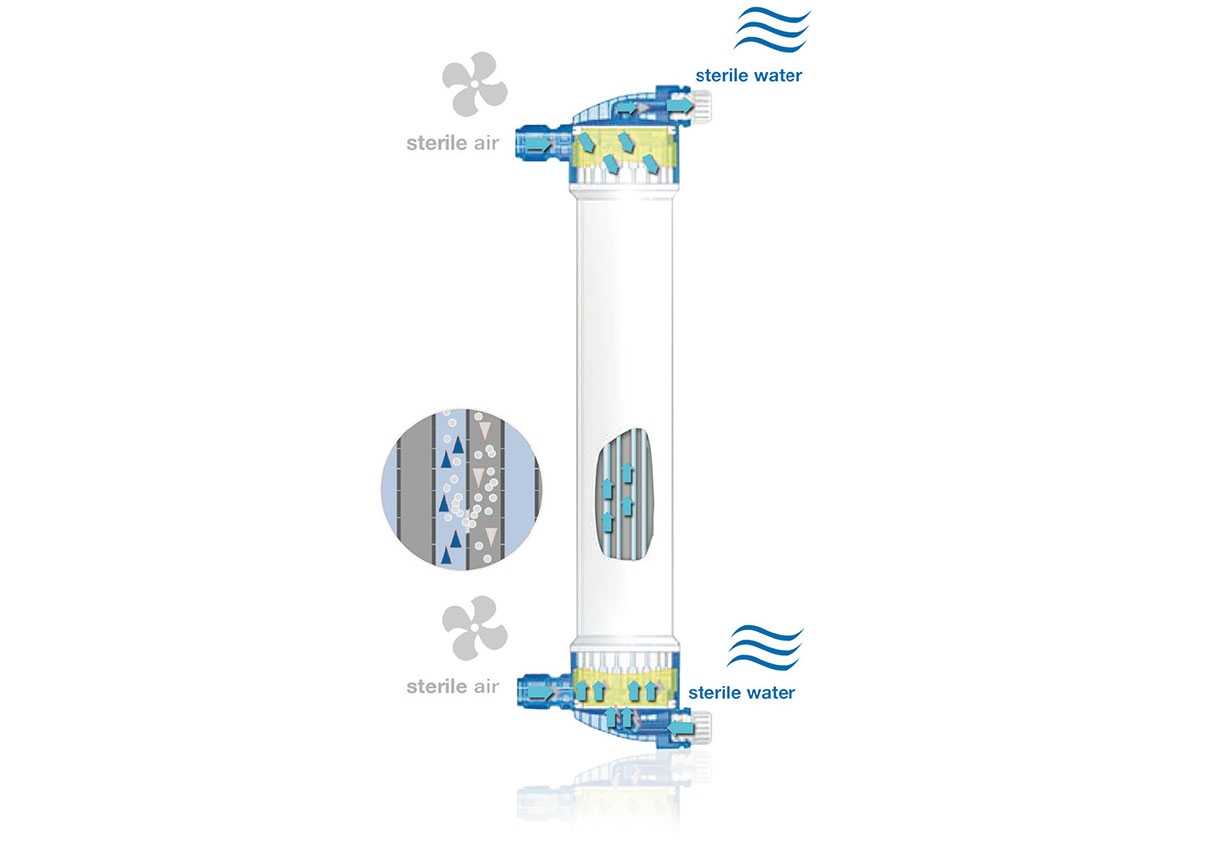
The benefits of INLINE steam sterilization | |
|---|---|
| No chemical residuals | No need for gamma sterilization – high energy ionizing radiation can degrade and alter the material chemistry |
| Low rinsing volumes | Rinsing time and volume is substantially lower compared to gamma sterilized dialyzers |
| Less rinsing – lower costs | Lower rinsing volumes mean reduced preparation costs |
INLINE steam sterilization process
Superior by design
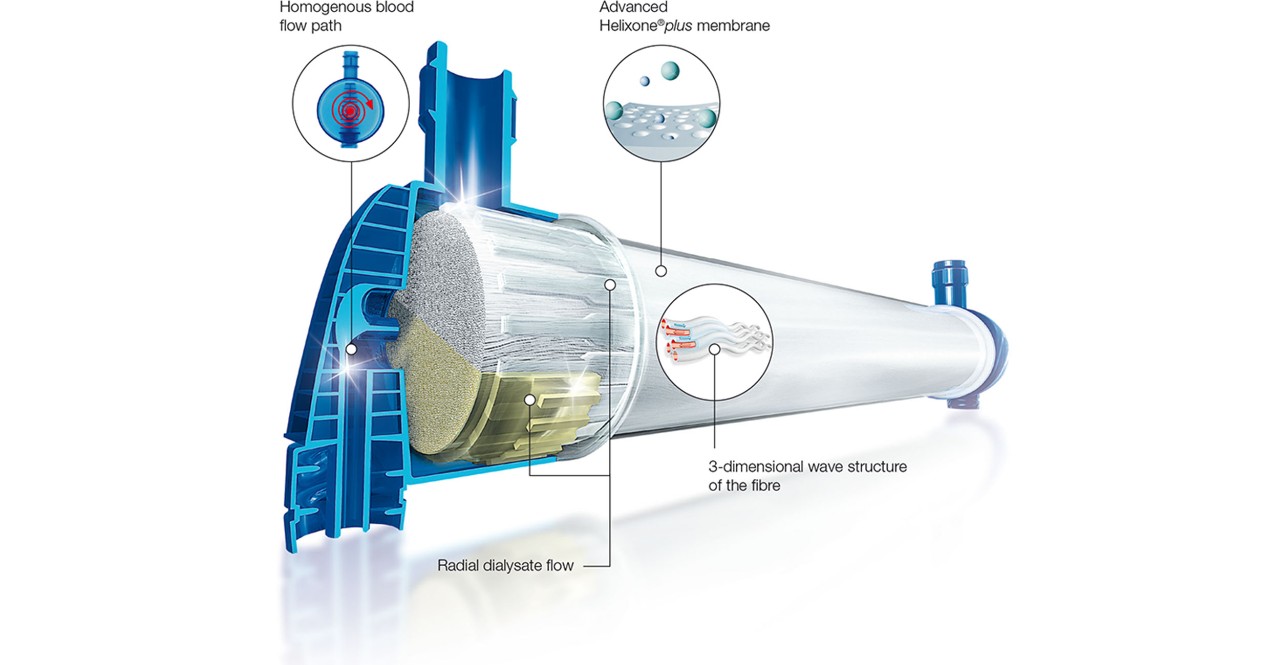
| Optimised dialysate flow | The three-dimensional microwave structure of the fibres ensures uniform radial dialysate flow around each fibre within the bundle by preventing fluid channeling, therefore enhancing clearance values and improving the overall performance of the dialyser. |
| Better haemodynamics | The lateral blood-inlet port ensures more homogenous blood flow in the dialyser header, preventing stagnation zones. The design essentially minimises the risk of kinking, contributing to improved safety. |
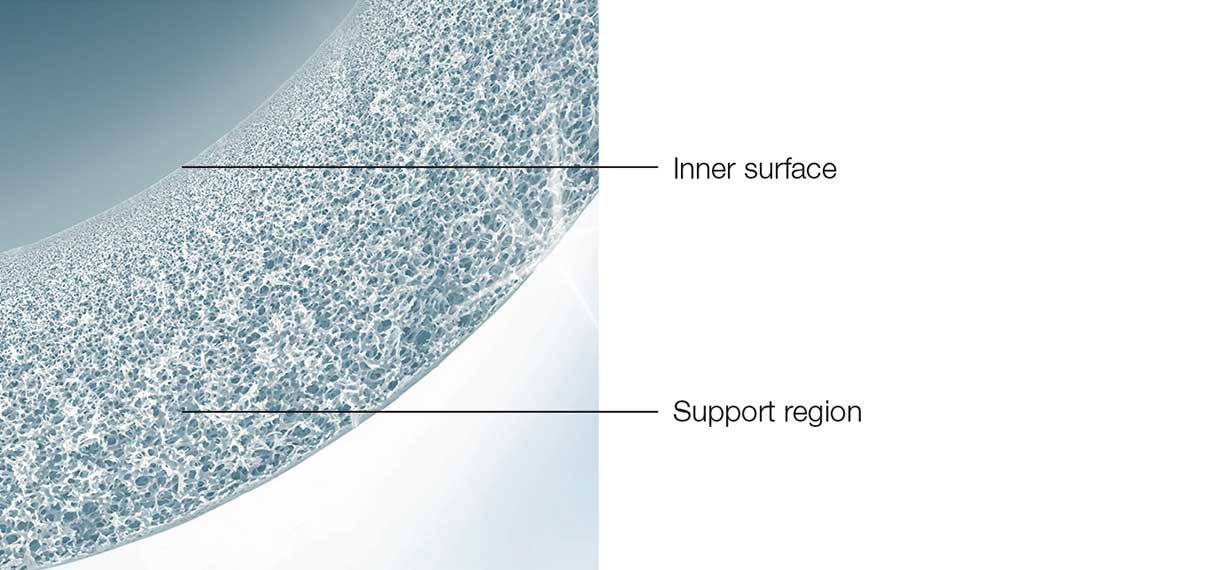
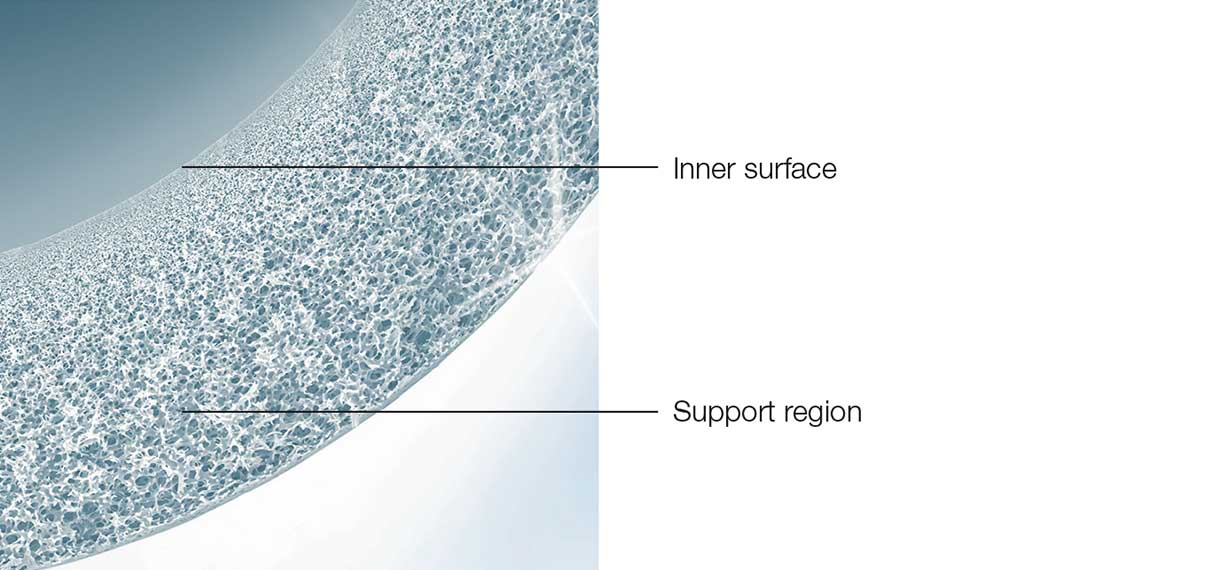
| Enhanced convection | The more open structure of the Helixone®plus membrane support region serves to reduce diffusion resistance and increases convective filtration. This facilitates the clearance of a broad range of uraemic toxins, especially the middle molecules. |
| Kind to the environment | Advanced design goes beyond direct functionality; it also has to be easy on the environment. FX-class® dialysers weigh half as much as dialysers with polycarbonate housing, and at the same time, use ecologically friendly plastics. This means a lower carbon footprint as a result of fewer materials, less packaging, less fuel for transport and cleaner waste management. |
Solutes encounter resistance while traversing the membrane wall. Resistance to solute transport is affected in part by pore size at the inner surface and the porosity of the membrane wall. Furthermore, wall structure and thickness, inner fibre dimensions and three-dimensional microwave structure play important roles in transmembrane flux. The new membrane structure of Helixone®plus allows for the easy passage of middle molecules across the more porous support region of the membrane.
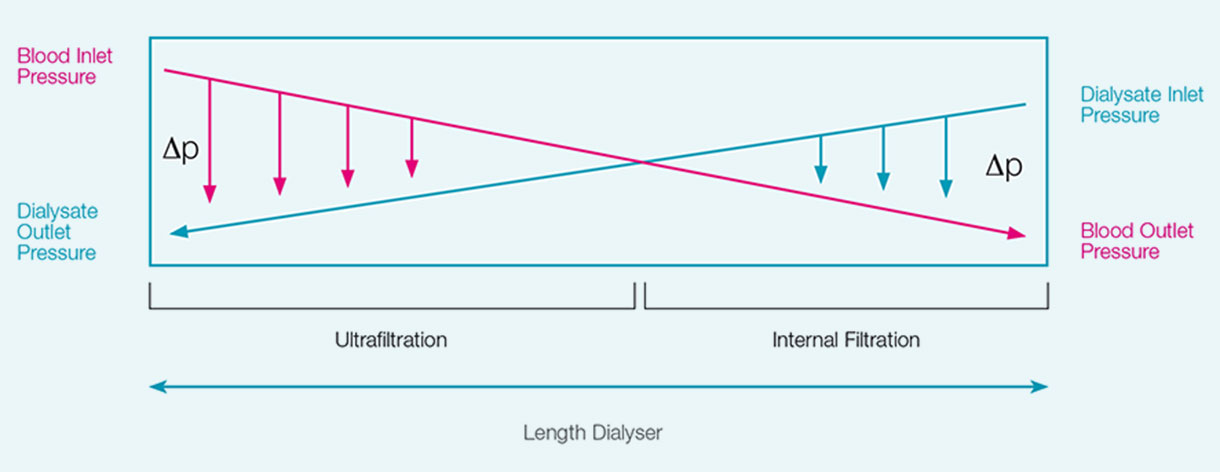
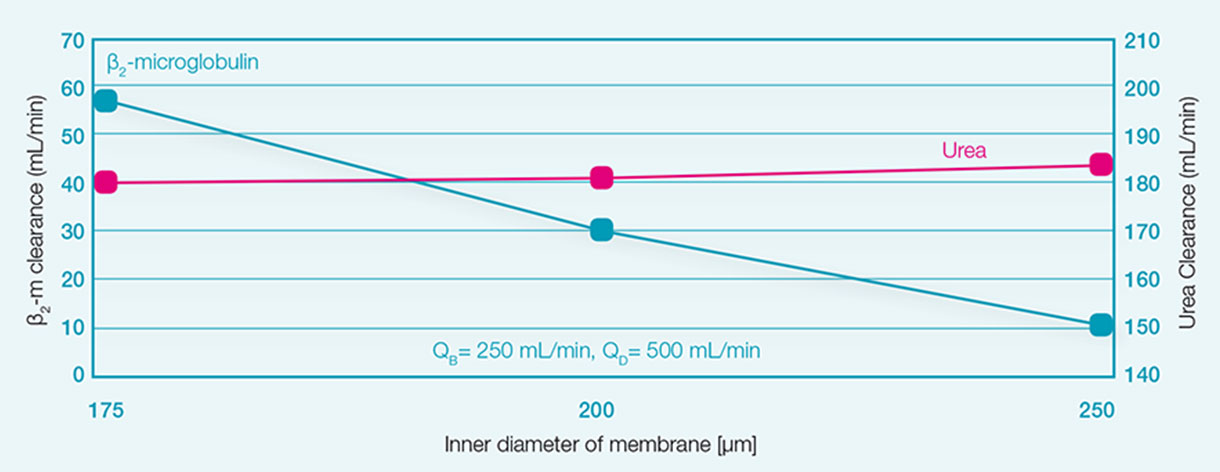
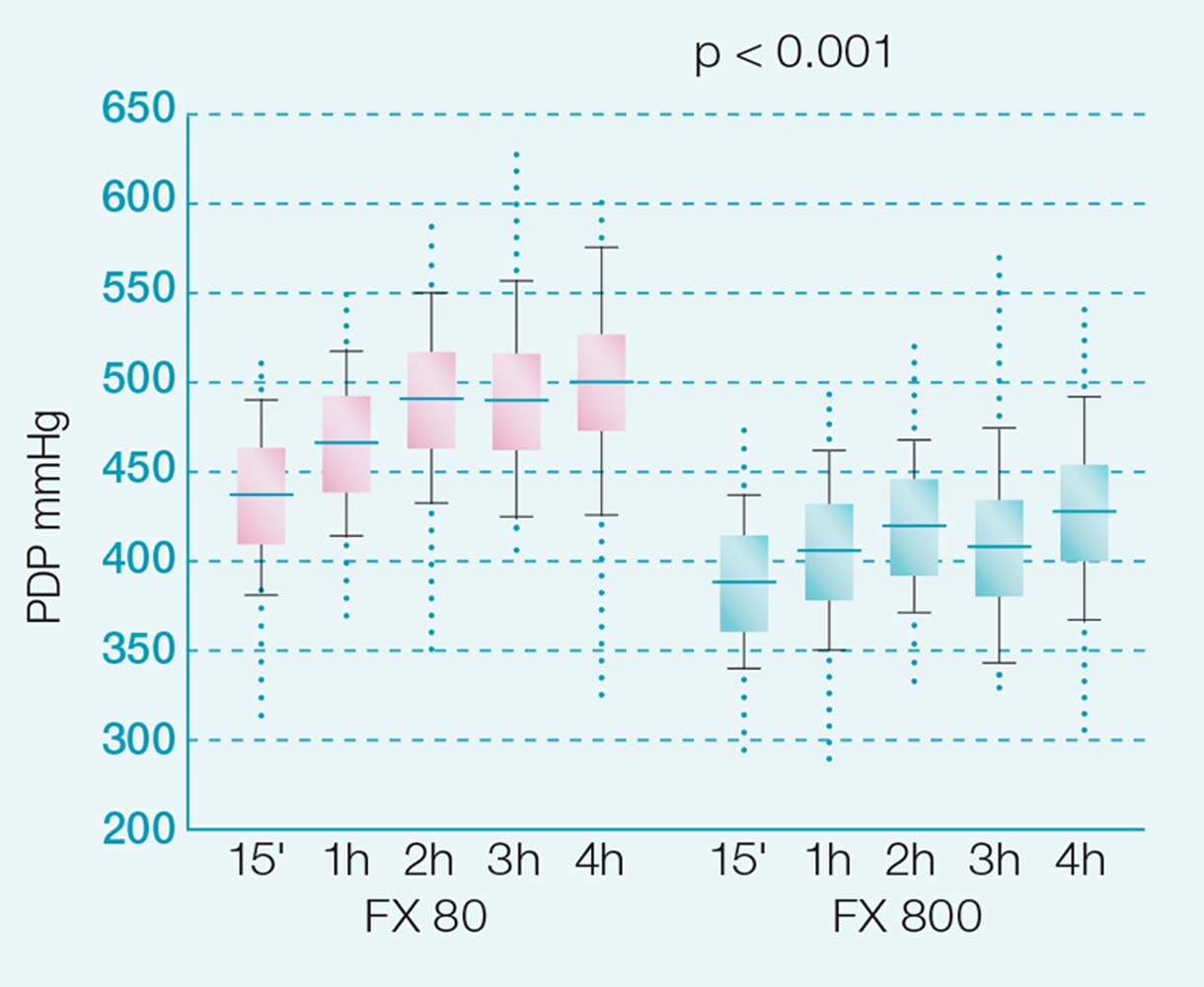
In an HD treatment, reducing the inner fibre diameter from 200 μm (F-series) to 185 μm (FX-class®) acts to increase internal filtration, thereby increasing the pressure gradient along the length of the fibre. This results in a greater pressure difference between the blood and dialysate compartments. Together with structural refinements to the support region of the fibres, this enables improvements in both diffusive and convective transport, which is of particular importance when performing High-Flux haemodialysis.
Benefit of reduced inner fiber diameter
Fiber pressure profile
Clearance versus the inner diameter of fiber
HighVolumeHDF therapy requires specially designed filters. As a result, FX CorDiax haemodiafilters were developed for HighVolumeHDF
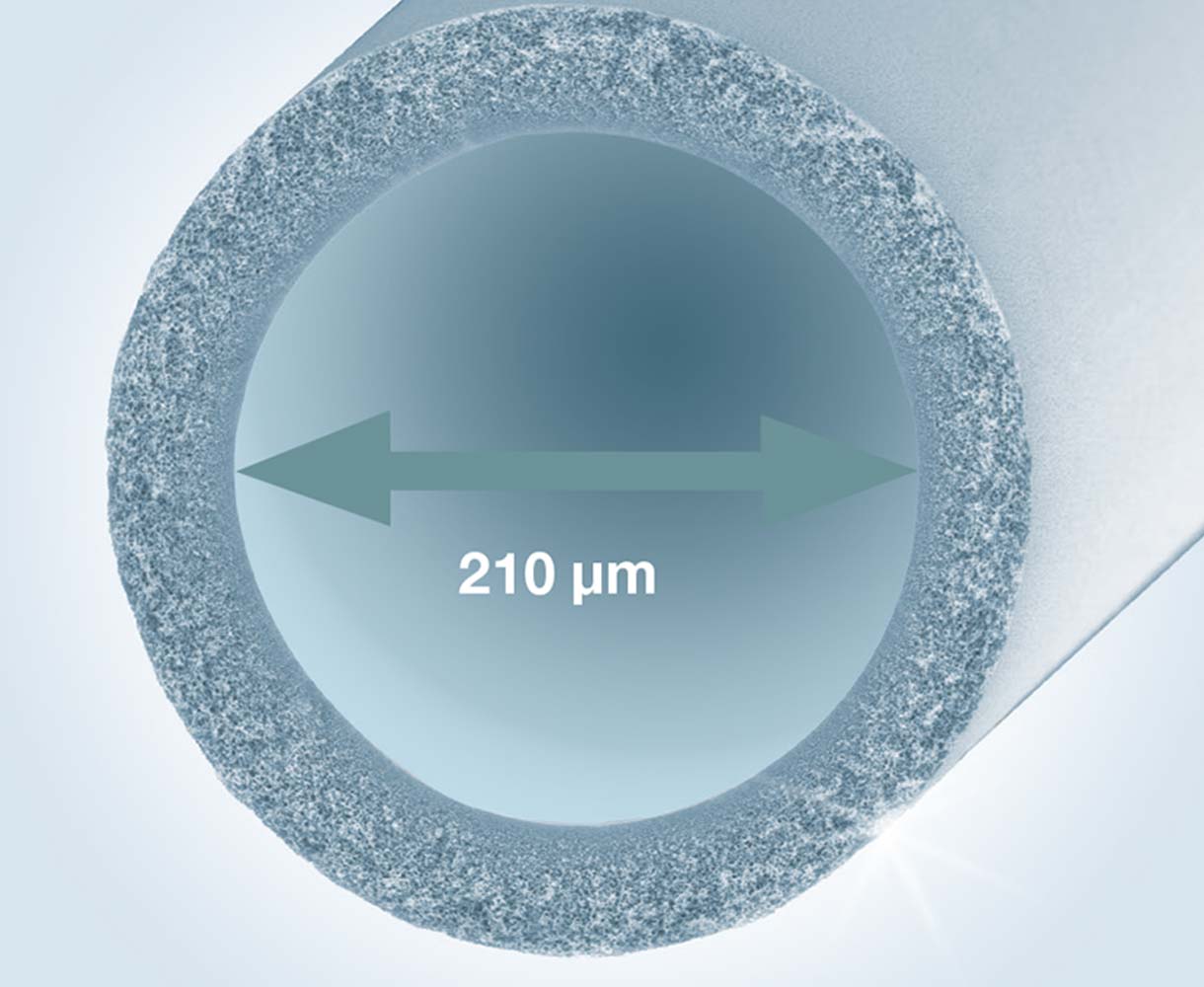
The benefit of enlarged fibre lumen in FX CorDiax haemodiafilters
| Sieving coefficients of FX CorDiax High-Flux Dialysers and Haemodiafilters | Molecular weight (Dalton) | |
|---|---|---|
| Albumin | 66,500 | < 0.001 |
| Myoglobin | 17,053 | 0.5 |
| β2-microglobulin | 11,731 | 0.9 |
| Inulin | 5,200 | 1 |
| Membrane material | Helixone®plus | |
| Sterilisation method | INLINE steam | |
| Housing material | Polypropylene | |
| Potting compound | Polyurethane | |
| Units per box | 24 |
| FX CorDiax High-Flux Dialysers | FX CorDiax 40 | FX CorDiax 50 | FX CorDiax 60 | FX CorDiax 80 | FX CorDiax 100 | FX CorDiax 120 | |
|---|---|---|---|---|---|---|---|
| Clearance (QB = 300 mL/min) | Molecular weight (Dalton) | ||||||
| Cytochrome c | 12,230 | 48 * | 76 | 96 | 111 | 125 | 136 |
| Inulin | 5,200 | 56 * | 88 | 116 | 127 | 144 | 149 |
| Vitamin B12 | 1,355 | 96 * | 144 | 175 | 190 | 207 | 213 |
| Phosphate | 132 | 142 * | 215 | 237 | 248 | 258 | 262 |
| Creatinine | 113 | 155 * | 229 | 252 | 261 | 272 | 274 |
| Urea | 60 | 175 * | 255 | 271 | 280 | 283 | 284 |
| Clearance (QB = 400 mL/min) | |||||||
| Cytochrome c | 12,230 | 100 | 117 | 133 | 145 | ||
| Inulin | 5,200 | 122 | 135 | 154 | 160 | ||
| Vitamin B12 | 1,355 | 191 | 209 | 229 | 237 | ||
| Phosphate | 132 | 270 | 285 | 299 | 305 | ||
| Creatinine | 113 | 290 | 303 | 321 | 325 | ||
| Urea | 60 | 319 | 336 | 341 | 343 | ||
| * Clearance (QB = 200 mL/min) | |||||||
| Ultrafiltration coeff. (mL/h x mmHg) | 21 | 33 | 47 | 64 | 74 | 87 | |
| In vitro performance: QD = 500mL/min, QF = 0mL/min, T = 37°C (ISO8637). Sieving coefficients: human plasma, QBmax, QF = 0.2 x QBmax (ISO8637). Ultrafiltration coefficients: human blood (Hct 32%, protein content 6%). | |||||||
| Effective surface (m2) | 0.6 | 1.0 | 1.4 | 1.8 | 2.2 | 2.5 | |
| K0A Urea | 547 | 886 | 1,164 | 1,429 | 1,545 | 1,584 | |
| Priming volume (mL) | 32 | 53 | 74 | 95 | 116 | 132 | |
| Article number | F00001588 | F00001589 | F00001590 | F00001591 | F00001592 | F00002384 | |
| FX CorDiax Haemodiafilters | FX CorDiax 600 | FX CorDiax 800 | FX CorDiax 1000 | |
|---|---|---|---|---|
| Clearance (QB = 300 mL/min, QF = 75 mL/min) | Molecular weight (Dalton) | |||
| Cytochrome c | 12,230 | 131 | 141 | 151 |
| Inulin | 5,200 | 144 | 156 | 166 |
| Vitamin B12 | 1,355 | 204 | 217 | 225 |
| Phosphate | 132 | 257 | 267 | 271 |
| Creatinine | 113 | 271 | 277 | 280 |
| Urea | 60 | 285 | 291 | 292 |
| Clearance (QB = 400 mL/min, QF = 100 mL/min) | ||||
| Cytochrome c | 12,230 | 149 | 160 | 172 |
| Inulin | 5,200 | 166 | 178 | 190 |
| Vitamin B12 | 1,355 | 235 | 251 | 262 |
| Phosphate | 132 | 307 | 321 | 328 |
| Creatinine | 113 | 327 | 339 | 343 |
| Urea | 60 | 354 | 365 | 367 |
| Ultrafiltration coeff. (mL/h x mmHg) | ||||
| In vitro performance: QD = 500 mL/min, T = 37°C (ISO8637). Sieving coefficients: human plasma, QBmax, QF = 0.2 x QBmax (ISO8637). Ultrafiltration coefficients: human blood (Hct 32%, protein content 6%). | ||||
| Effective surface (m2) | 1.6 | 2.0 | 2.3 | |
| K0A Urea | 1,148 | 1,365 | 1,421 | |
| Priming volume (mL) | 95 | 115 | 136 | |
| Article number | F00001593 | F00001594 | F00001595 | |
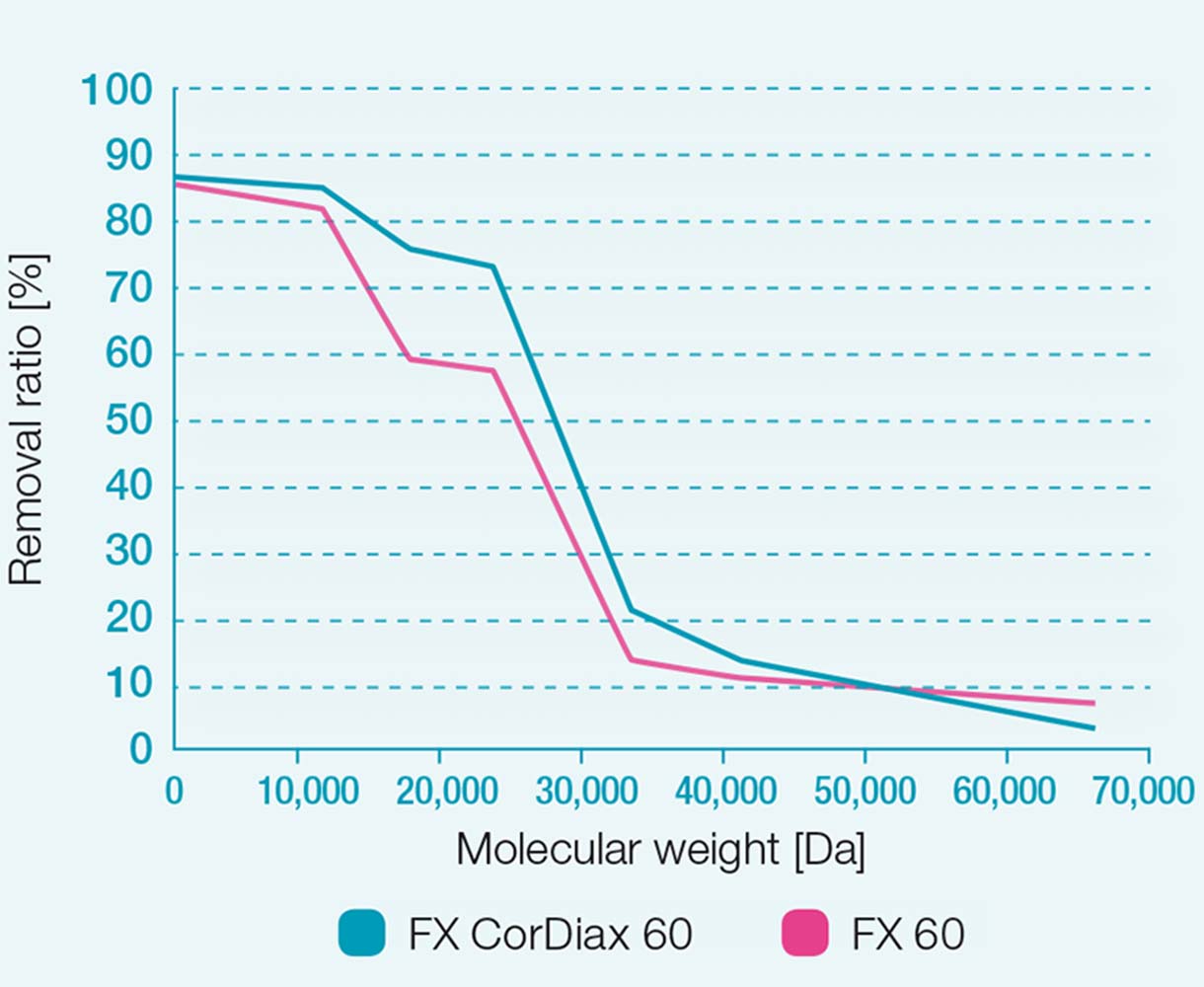
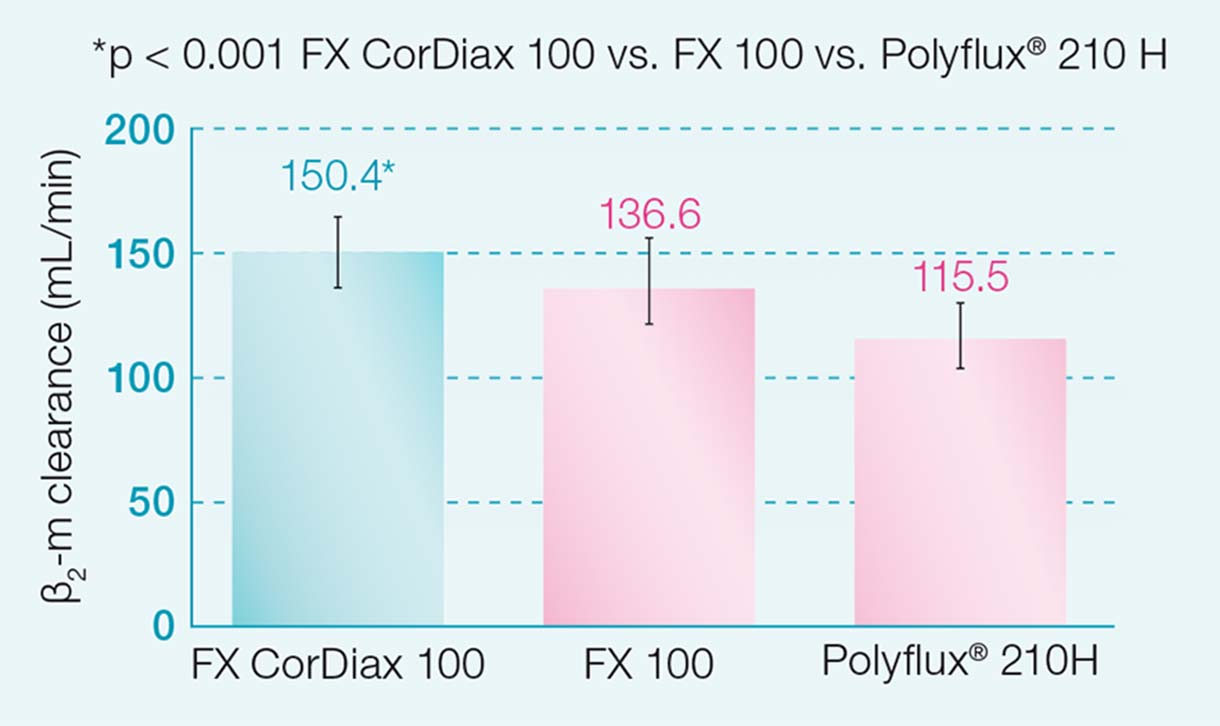
Maduell et al. determined the removal capacity of FX CorDiax 60 compared to FX 60 in HDF postdilution treatments. Significantly higher removal rates were observed with FX CorDiax for:
The authors concluded that “… treating patients with online hemodiafiltration and FX CorDiax 60 instead of FX 60 dialysers results in significantly increased reduction ratios of middle sized molecules without clinically relevant changes in albumin loss.”
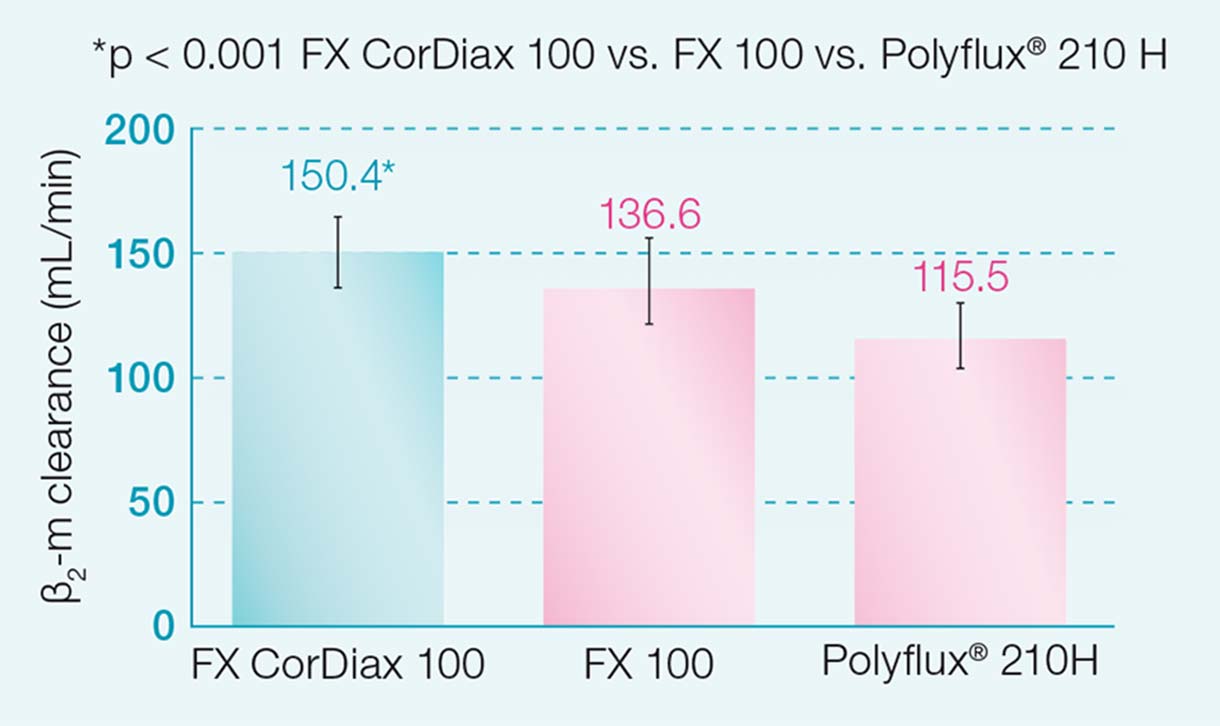
Comparison of albumin loss in a post-dilution HDF treatment
(QB = 350 mL/min, QD = 800 mL/min, QS = 80 mL/min)4
| Albumin loss (g/four hours) | |
|---|---|
| FX CorDiax 100 | 1.74 ± 1.01 |
| FX 100 | 2.10 ± 1.00 |
| Polyflux® 21 OH | 1.31 ± 0.12 |
Comparison of aqueous in-vitro clearances of phosphate (QB = 300 ml/min, QD = 500 ml/min). Investigations carried out by EXcorLab GmbH, an accredited calibration and testing laboratory.
If you would like to order this product via the NHS Supply Chain Catalogue, please visit the following link: NHS Supply Chain Online Catalogue
Additional information relating to multiBic or Calrecia can be found in the critical care section of our product information page.
Adverse events should be reported. Reporting forms and information can be found at www.mhra.gov.uk/yellowcard or search for MHRA Yellowcard in the Google Play or Apple App Store. Adverse events should also be reported to Fresenius Medical Care on 01623 445215 or VigilanceUK@freseniusmedicalcare.com
UK-All-000020. Date of Preparation: June 2026.
HighVolumeHDF® as easy as HD.
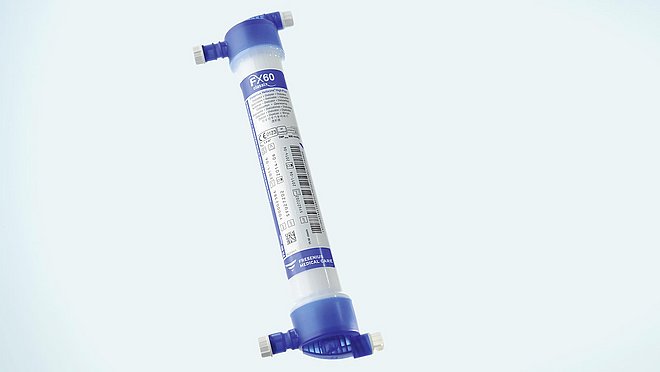
Proven Fresenius Medical Care quality for standard haemodialysis.
1 Dellanna F. et al., (1996); Nephrology Dialysis Transplantation 11 (Suppl 2): 83-86.
2 Vega Vega O. et.al.; ERA-EDTA Congress 2012, Poster 457—FP.
3 Maduell et. al.; ERA-EDTA Congress 2013, May 20, Poster Number MP 390.
4 Bock A. et al., Journal of the American Society of Nephrology (2013); 24: SA-PO404.