Country websites

Attention

For UK healthcare professionals (Nephrologists/Renal Nurses and Pharmacists) information only on Fresenius Medical Care’s medicines, medical devices, services, educational resources and more.

I'm a UK healthcare professional

Important notice – this site is intended for UK healthcare professionals only. By entering this site, and clicking on the button “Accepted and Confirmed”, you are confirming that you are a UK healthcare professional. In addition to educational resources, this site contains promotional information.

UK/HEMA/FME/0922/0005 Date of Preparation: November 2022

FX high-flux and FX low-flux dialysers

Innovation at all levels

  • State-of-the art FX-class design
  • Efficient removal of uraemic toxins with the Helixone® membrane
  • INLINE steam sterilized
  • Available in both low-flux and high-flux ranges

Key features

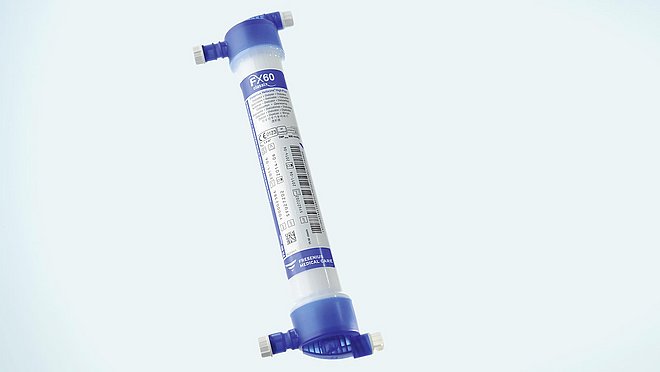
FX dialysers

    A dialyser is often referred to as an “artificial kidney" in dialysis treatment. Its function is to remove any excess wastes and fluid from the blood, when the patient's kidneys can no longer perform that task.

    Several state-of-the-art technologies have been combined to create the distinctive, functional features of the FX dialysers. The fibre bundle geometry, the membrane nanostructure, the flow port and the housing design all provide advantages in terms of performance, haemodynamics, dialysate flow and safety and handling.

    Improved design and refined haemodynamics

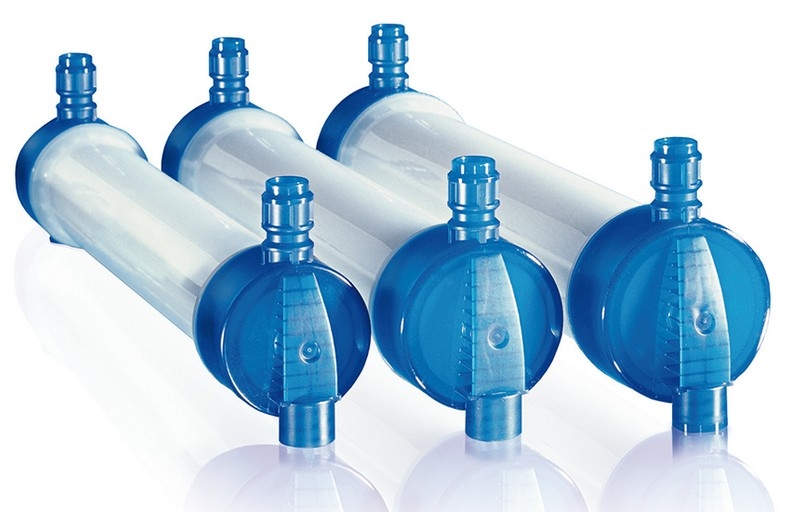
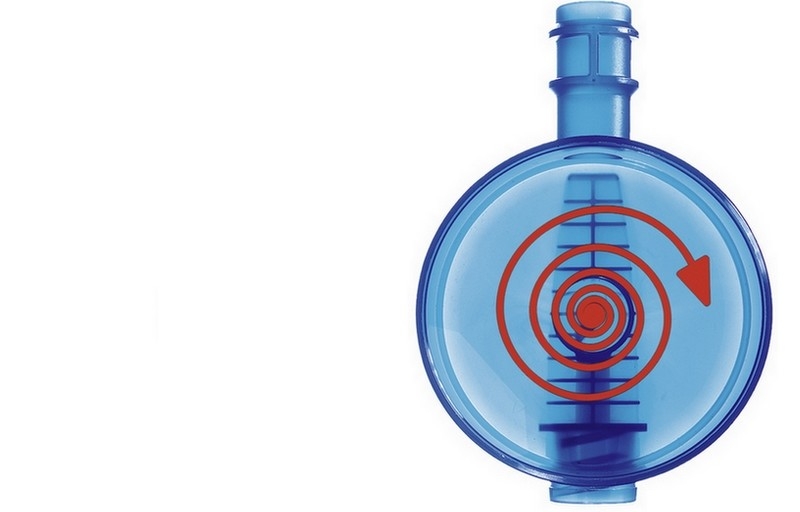
      • The lateral blood inlet port provides a homogenous blood flow path, avoiding low velocity stagnation zones in the header region
      • The risk of accidental kinking of bloodlines is very low

      Lateral blood inlet ports provide a homogenous blood flow path

      Improved design and refined haemodynamics

      • The lateral blood inlet port provides a homogenous blood flow path, avoiding low velocity stagnation zones in the header region
      • The risk of accidental kinking of bloodlines is very low

      Radial dialysate flow

      • The pinnacle structure of the polypropylene housing ensures a uniform dialysate flow around the entire fibre bundle
      • A high packing density of the fibre bundle and a special wavy fiber structure avoid dialysate channeling
      • Combined, these features enable the constant performance of all FX dialysers

      Optimum fibre dimensions

      • The reduced inner diameter and wall thickness of the fibre increase the internal filtration and minimise diffusive resistance
      • A significant increase of both the diffusive and convective clearances is therefore achieved, allowing for the efficient removal of a broad spectrum of uraemic toxins 

      Dialyser weight

          • Dialyser weight is a crucial factor not only in logistics, but also in waste management
          • The housing of FX dialysers is made of polypropylene. In comparison with the widely used polycarbonate, it is much lighter
          • The result: FX dialysers weigh around half as much as most dialysers.
          • FX60=105g

          Technology

          Helixone®: the advanced polysulfone membrane 

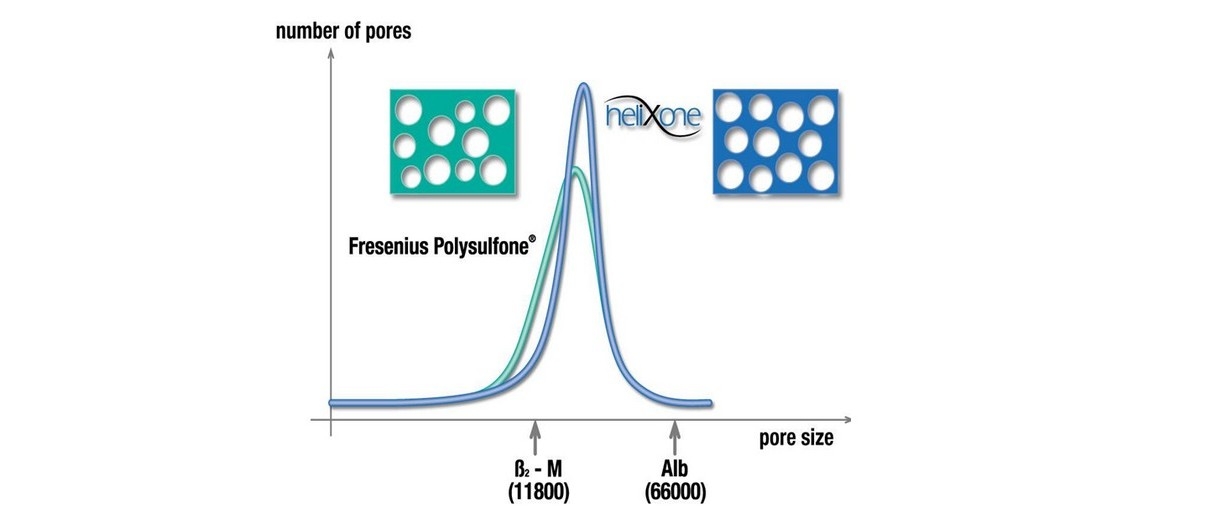
          • Nanotechnology membrane fabrication procedures (Nano Controlled Spinning Technology, NCS™) provide Helixone® with a highly defined pore structure and distribution at the innermost, separating region of the membrane1,2
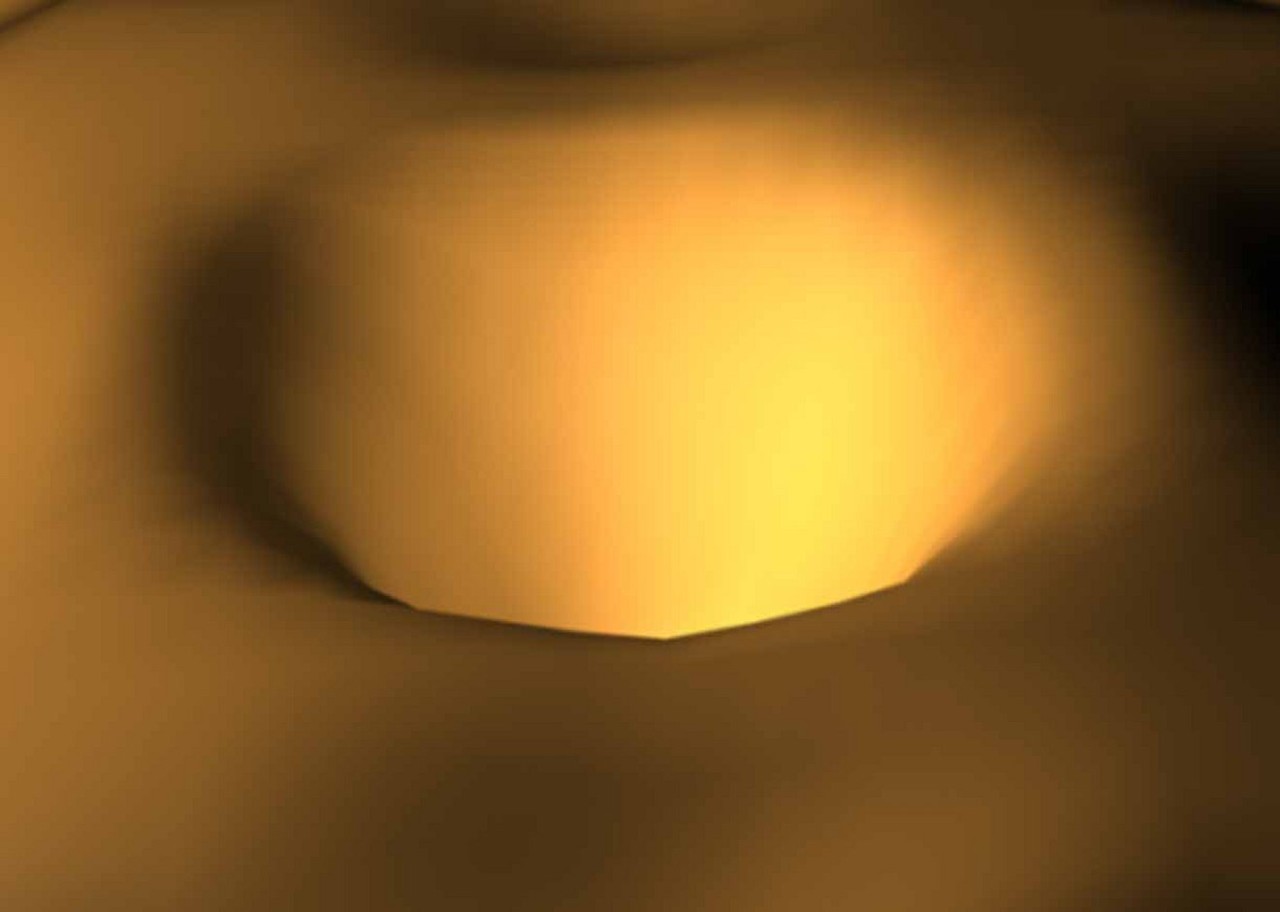
          • Unlike conventional pores, which were rough and uneven in shape, the pores in the inner layer of the Helixone® membrane are smooth and cylindrical
          • This reduces the molecules' resistance when travelling through the pores and allows for enhanced removal

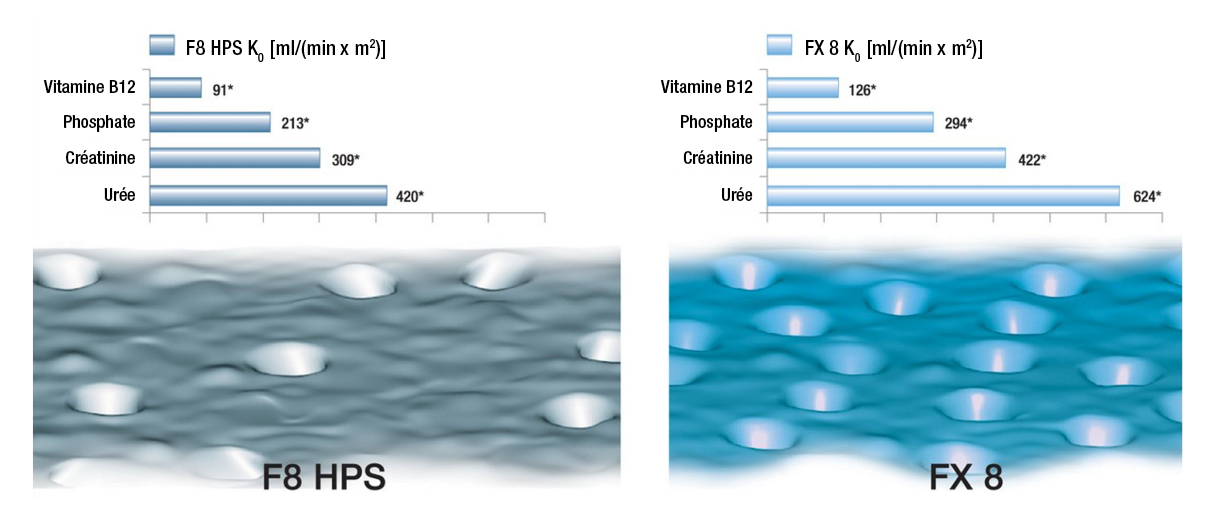
          Conventional pores

          Helixone® pores

          Helixone® has been specially designed to meet the demands of both low-flux and high-flux therapies:

          • More even distribution of pores
          • Estimated increased average pore size of 1.8 nm (low-flux) and 3.3 nm (high-flux)
          • Increased performance per unit of surface area

          NCSTM results in optimised pore size distribution and larger average pore size

          Performance (K0) per m² surface area

          INLINE steam sterilisation – purity ensured

          No chemical residuals. Low rinsing volumes. Lower costs.

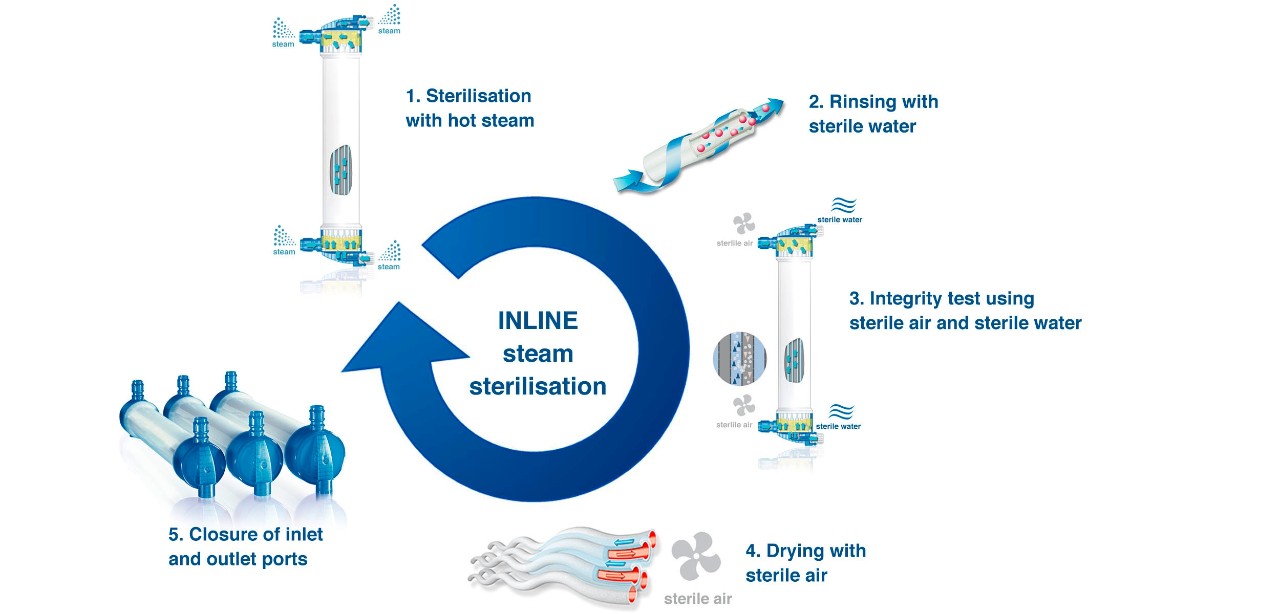
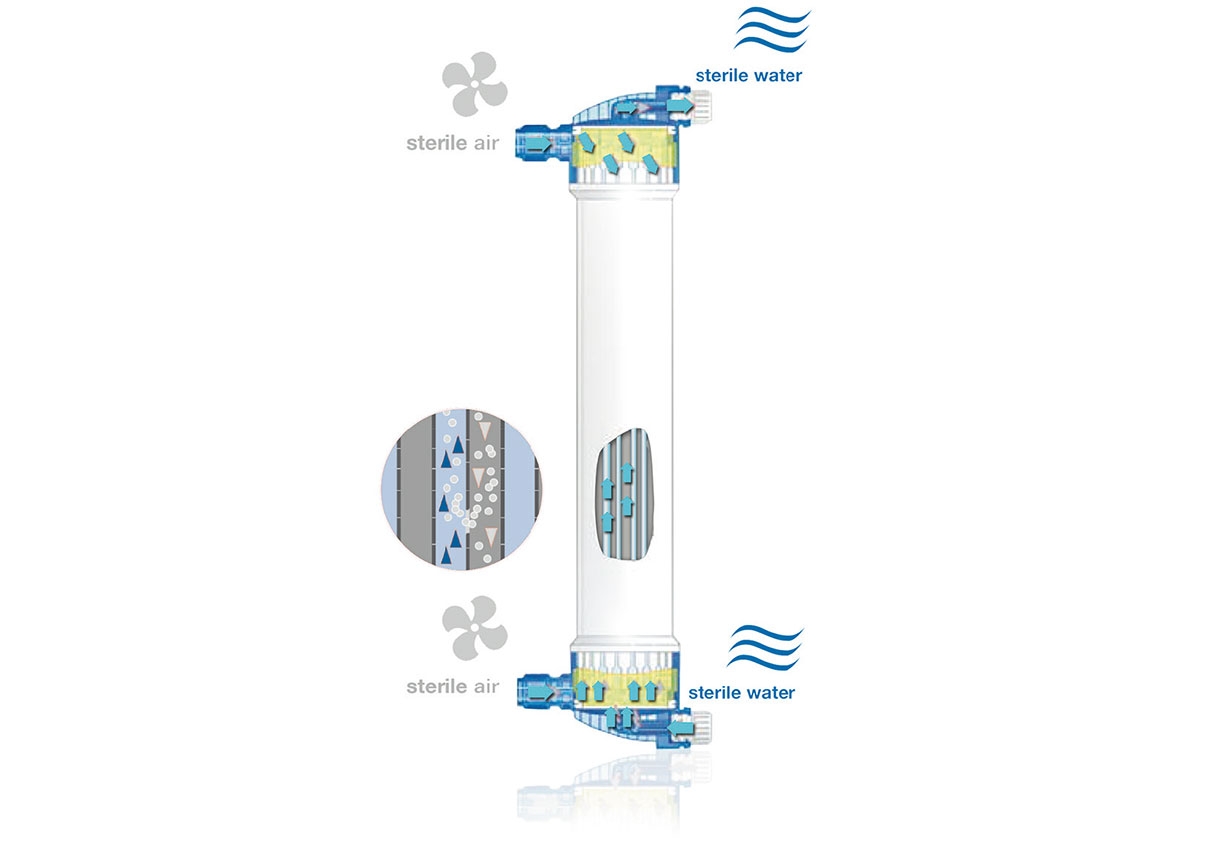
          INLINE steam sterilisation process

          INLINE steam sterilisation – how it works

          1. Both the blood and the dialysate compartment of the dialysers are rinsed continuously with steam at a temperature of 121°C for a minimum of 15 minutes, or a higher temperature for a shorter time, to ensure sterility. 
          2. The dialyser is rinsed with sterile water
          3. Every dialyser is tested for fibre integrity using a bubble-point test
          4. The dialysers are dried with warm, sterile air
          5. Finally, after drying the blood inlet and outlet, ports are closed

          INLINE steam sterilisation: the benefits

          • Highly pure, sterile and pyrogen-free dialysers without any potentially harmful residues from sterilisation
          • The biocompatibility of membranes remains unaffected by sterilisation
          • The optimised use of resources due to low rinsing volumes: only 500 ml is required
          • Dry dialysers with minimised risk of contamination due to microbial growth

          Fibre integrity testing

              • All dialysers have to pass the bubble point test as part of the INLINE steam sterilisation process
              • Sterile air is forced into the dialysate compartment while the blood compartment contains sterile water
              • If any leakages were present in the membrane, air would pass through the membrane and create bubbles
              • Dialysers failing the integrity test are discarded
              • This integrity test minimises the risk of fibre ruptures and the risk of blood leakages

              Performance data

              FX low-flux dialysers

              FX low-flux dialysersFX 5FX 8FX 10
              Ultrafiltration coefficient (ml/h x mmHg)81214
              Clearance: QB: (200ml/min)   
              Urea180191193
              Creatinine165178181
              Phosphate141160170
              Vitamin B1288107121
              Clearance: QB: (300ml/min)    
              Urea228254261
              Creatinine200225231
              Phosphate164194210
              Vitamin B1294120138
              Clearance: QB: (400ml/min)    
              Urea 293303
              Creatinine 252260
              Phosphate 213233
              Vitamin B12 126146
              The in vitro performance data were obtained with QD = 500ml/min:
              QF = 0ml/min; T=37°C (ISO8637)
              The ultrafiltration coefficients were maintained using human blood,
              Hct = 32%, protein content 6%
               
              Effective surface area (m²)1.01.41.8
              Blood filling volume (ml)547495
              Membrane materialHelixone® 
              Housing materialPolypropylene
              Potting compoundPolyurethane
              Sterilisation methodINLINE steam
              ApplicationHD

              FX high-flux dialysers

              FX high-flux dialysersFX 40FX 50FX 60FX 80FX 100
              Ultrafiltration coefficient (ml/h x mmHg)2033465973
              Clearance: QB: (200ml/min)     
              Urea170189193197 
              Creatinine144170182189 
              Phosphate138165177185 
              Vitamin B1284115135148 
              Inulin547695112 
              Clearance: QB: (300ml/min)      
              Urea 250261276278
              Creatinine 210230250261
              Phosphate 201220239248
              Vitamin B12 130155175192
              Inulin 81104125142
              Clearance: QB: (400ml/min)      
              Urea  303362331
              Creatinine  262287304
              Phosphate  248272284
              Vitamin B12  167190213
              Inulin  109133152
              The in vitro performance data were obtained with QD = 500ml/min:
              QF = 0ml/min; T=37°C (ISO8637)
              The ultrafiltration coefficients were maintained using human blood,
              Hct = 32%, protein content 6%
               
              Effective surface area (m²)0.61.01.41.82.2
              Blood filling volume (ml)32537495116
              Membrane materialHelixone® 
              Housing materialPolypropylene
              Potting compoundPolyurethane
              Sterilisation methodINLINE steam
              ApplicationHD/HDF/HF

              FX hemodiafilters

              FX hemodiafiltersFX 600FX 800FX 1000
              Ultrafiltration coefficient (ml/h x mmHg)526375
              Clearance: QB: (200ml/min)QF: (0ml/min)   
              Urea196198 
              Creatinine184190 
              Phosphate180184 
              Vitamin B12141149 
              Inulin101110 
              Clearance: QB: (300ml/min) QF: (75ml/min)     
              Urea284289290
              Creatinine262271280
              Phosphate254262269
              Vitamin B12199209211
              Inulin150161164
              Clearance: QB: (400ml/min) QF: (100ml/min)   
              Urea351361364
              Creatinine313328343
              Phosphate301313325
              Vitamin B12229241244
              Inulin172185188
              The in vitro performance data were obtained with QD = 500ml/min:
              T=37°C (ISO8637)
              The ultrafiltration coefficients were maintained using human blood,
              Hct = 32%, protein content 6%
               
              Effective surface area (m²)1.51.82.2
              Wall thickness / inner diameter (µm)35/210  
              Blood filling volume (ml)97118138
              Membrane materialHelixone® 
              Housing materialPolypropylene
              Potting compoundPolyurethane
              Sterilisation methodINLINE steam
              ApplicationHD/HDF

              If you would like to order this product via the NHS Supply Chain Catalogue, please visit the following link: NHS Supply Chain Online Catalogue

              Additional information relating to multiBic or Calrecia can be found in the critical care section of our product information page.

              Adverse Events Reporting 

              Adverse events should be reported. Reporting forms and information can be found at 

              https://yellowcard.mhra.gov.uk/ or search for MHRA Yellowcard in the Google Play or Apple app store. Adverse events should also be reported to Fresenius Medical Care on 01623 445100.

              UK/HEMA/FME/0922/0005 Date of Preparation: November 2022

              Related content

              Bowry, S.K.: Nano-controlled membrane spinning technology: Regulation of pore size, distribution and morphology of a new polysulfone dialysis membrane. In Hemodialysis Technology (eds: Ronco, C., La Greca, G.) Contributions to Nephrology, Vol. 137: 85-94 (2002)

              2 Ronco, C., Nissenson, A.R.: Does nanotechnology apply to dialysis? Blood Purification 19: 347-352 (2001)