Our patient stories and company features.

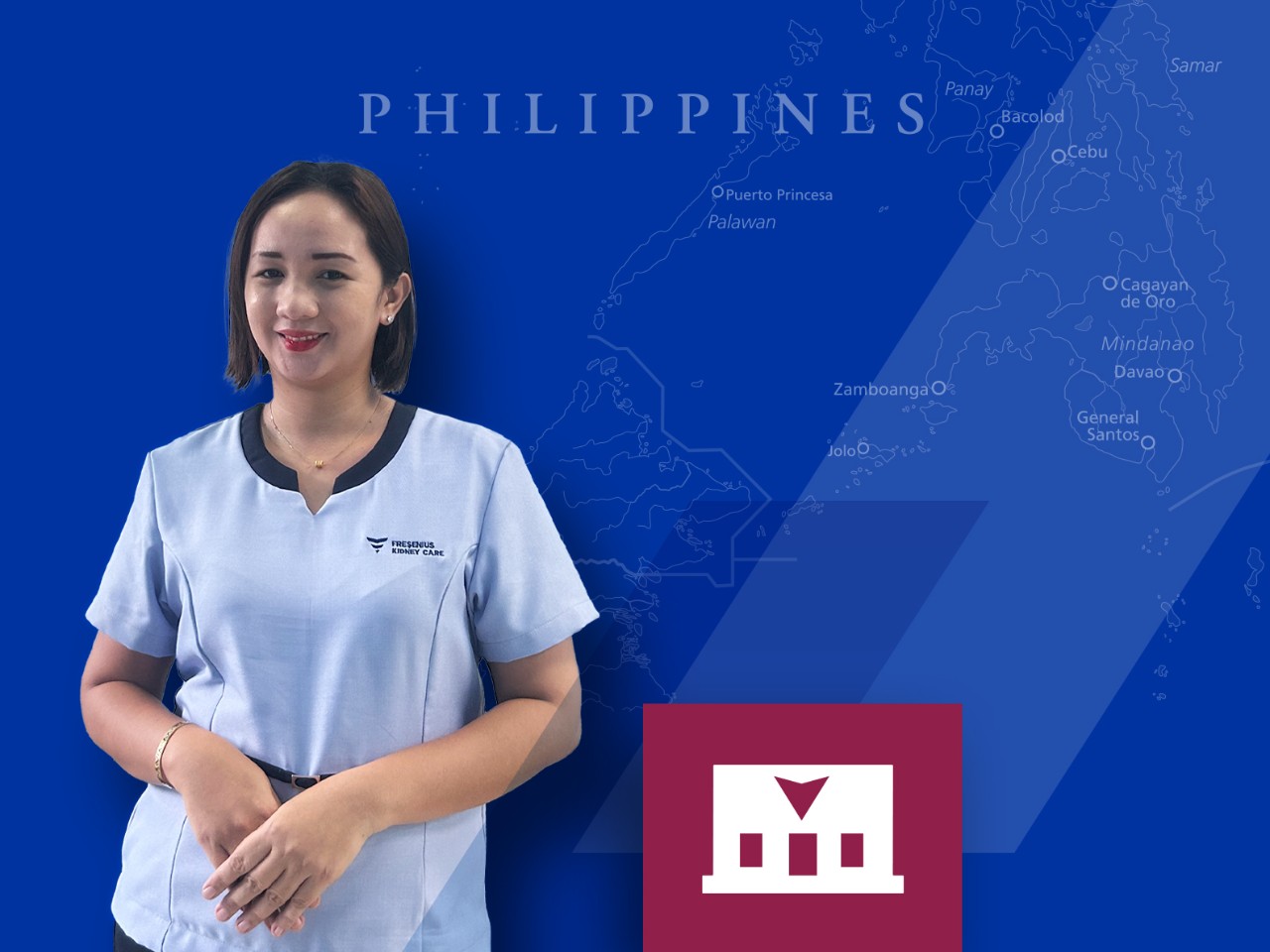
Before the sun rises in Midsayap in the Republic of the Philippines, Roxanne Bingil is already awake. The house is quiet as she moves through her home preparing for the day, balancing the demands of her career as a dialysis nurse, single motherhood, and personal health as someone recovered from Bell’s palsy. She cooks breakfast for her family and sets aside her seven-year-old son’s clothes for school. By the time she leaves for work, her son is still sleeping, but she pushes forward with her daily routine.
Bingil began her career as a general nurse more than decade ago and took an interest in nephrology. For over 8 years, she’s been a dialysis nurse and in 2019, she joined Fresenius Medical Care (FME) as the head of her unit, managing both clinical and business operations. Now, she is an Area Associate Manager, managing business operations for five clinics on the island of Mindanao.
“Dialysis is a really special area, and I love taking care of our patients” she says. “I really empathize with them, and I love my job. I think this career is my calling.”
As a single mom, Bingil faces the daily challenge of balancing family and work. She credits her family, especially her mother, for helping her manage these responsibilities.
“Balancing work and being a single mom can be incredibly challenging,” she says. “It requires a combination of organization, planning, support, and most especially, self-care. I’ve also been very fortunate to have a great support system at home and at work.”
Bingil’s mother takes care of her son when she is working, and she is grateful to have a supportive team at work that is like family to her. This support was crucial when Bingil faced a health crisis that disrupted her entire life.
“One typical morning in 2022, Bingil was getting ready for work when she suddenly felt a strange sensation in her right eye. When she looked in the mirror, the right side of her face was frozen, her mouth drooping and in pain. Petrified, she went to the doctor immediately and was diagnosed with Bell’s palsy.
“My life took an unexpected turn when I was diagnosed with Bell’s palsy — it left my face paralyzed for four months,” she recounts. “I had to tape my eye shut at night and only drink through straws. I stayed hidden at home most days while I was recovering, and when I went out, I wore a hat, sunglasses, and a mask. This had a huge impact on my confidence, and I felt anxious on occasions when photographs were taken.”
During her recovery, not only did Bingil’s family provide her with the care and support she needed, but her colleagues also stepped in for support. She was able to take enough time off to get well, reassured by her manager that her clinic would be well taken care of. As someone who cares deeply about her work and is usually the one giving care rather than receiving it, Bingil would sometimes call her clinic to ask for updates and see if she can help in any way while she recovers.
“Becoming a patient when you’re usually a provider can be a unique and often challenging experience,” she reflects. “Navigating this dual identity can be complex, but it offered me a chance to find a deeper connection to my patients’ experience.”
Recovery is a mosaic of setbacks and triumphs, of learning to be gentle with oneself. “Health must always come first. This period of illness forced me to recognize the importance of self-care and prioritizing my well-being,” Bingil says. “Resilience is not just about bouncing back, but also about adapting and finding new ways to move forward despite adversity.”
In the evenings, Bingil returns home. She cooks dinner, listens to her son recount his day, and prepares for another day. Bingil’s story is about the quiet heroism of everyday life and reminds us that behind every healthcare professional is a person facing their own challenges and experiences that can make them even more compassionate caregivers.
Publication date: December 2025
Our patient stories and company features.
From Nursing Student to Two-Time Heart Transplant Survivor