


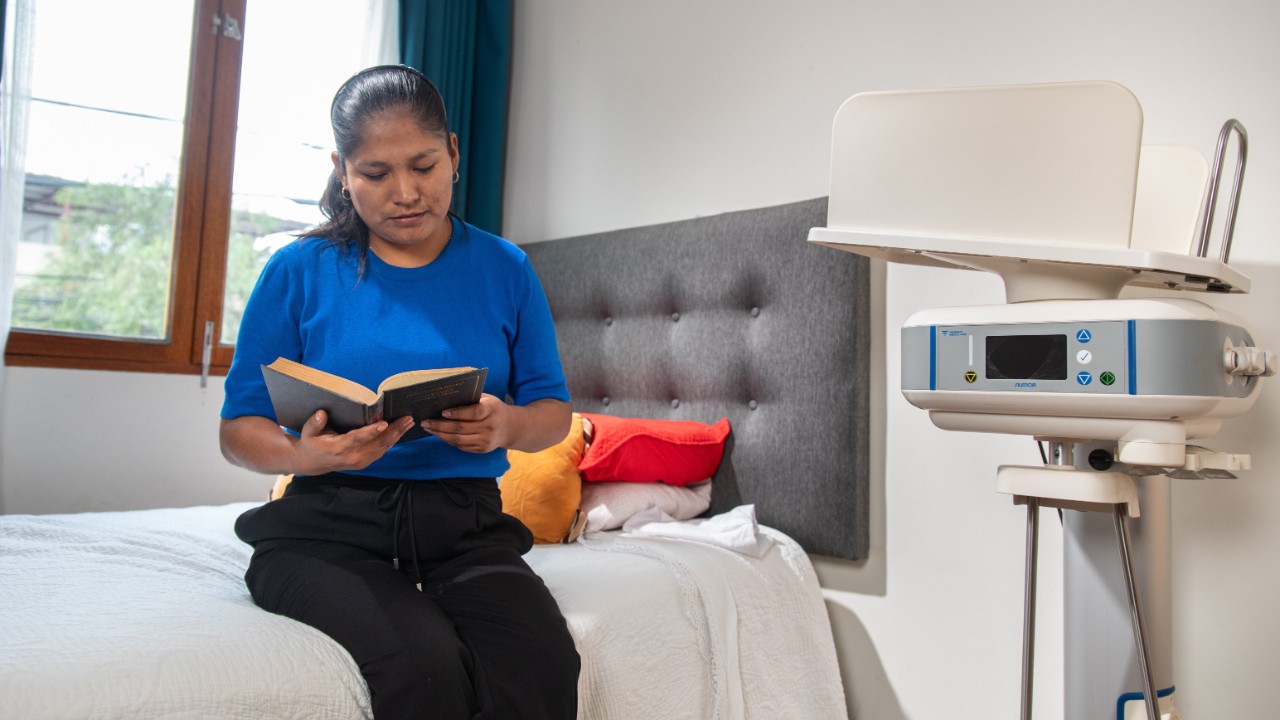
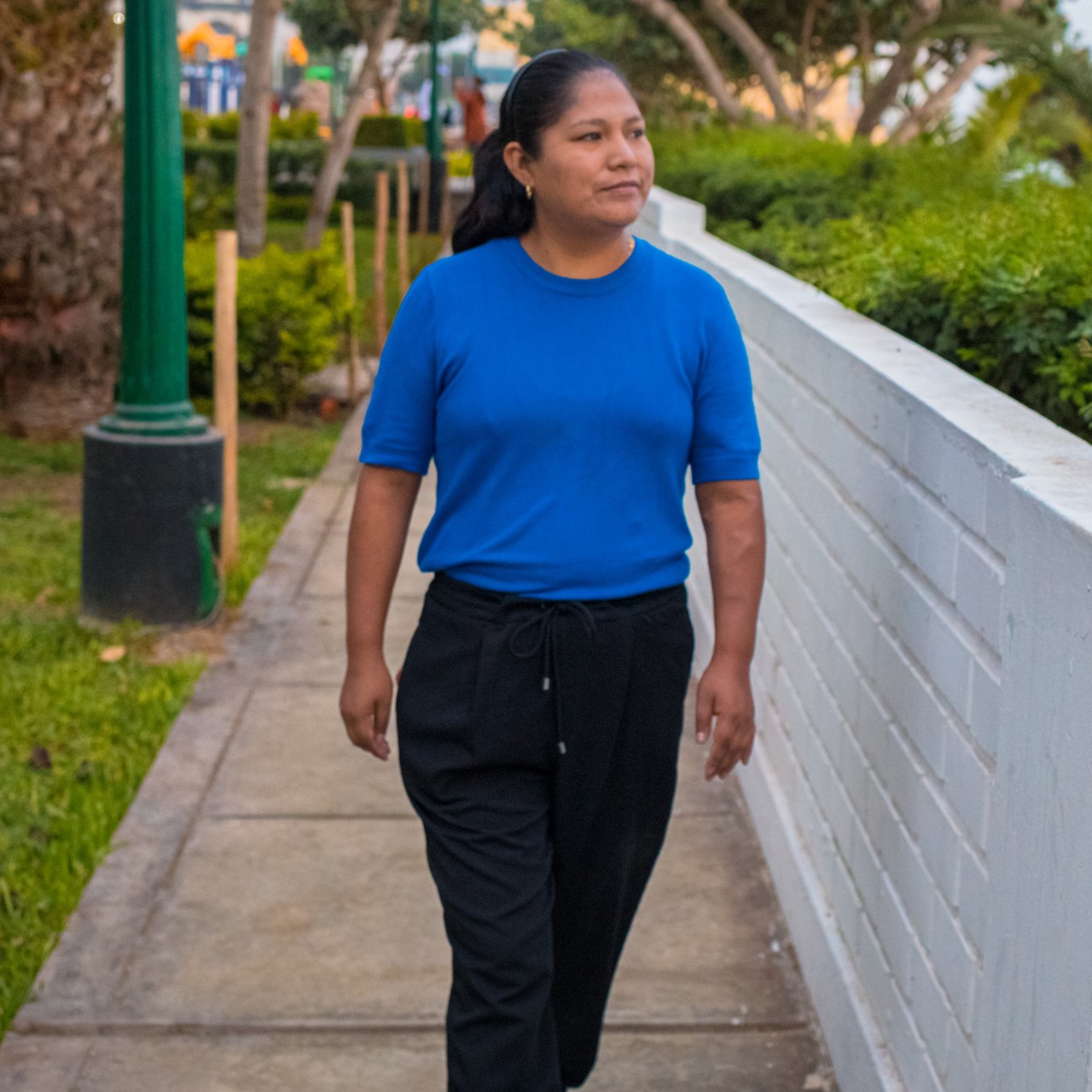

Fresenius Medical Care offers holistic solutions for CAPD and APD patients, which includes supporting patients in preparing for PD with training solutions and the set up.

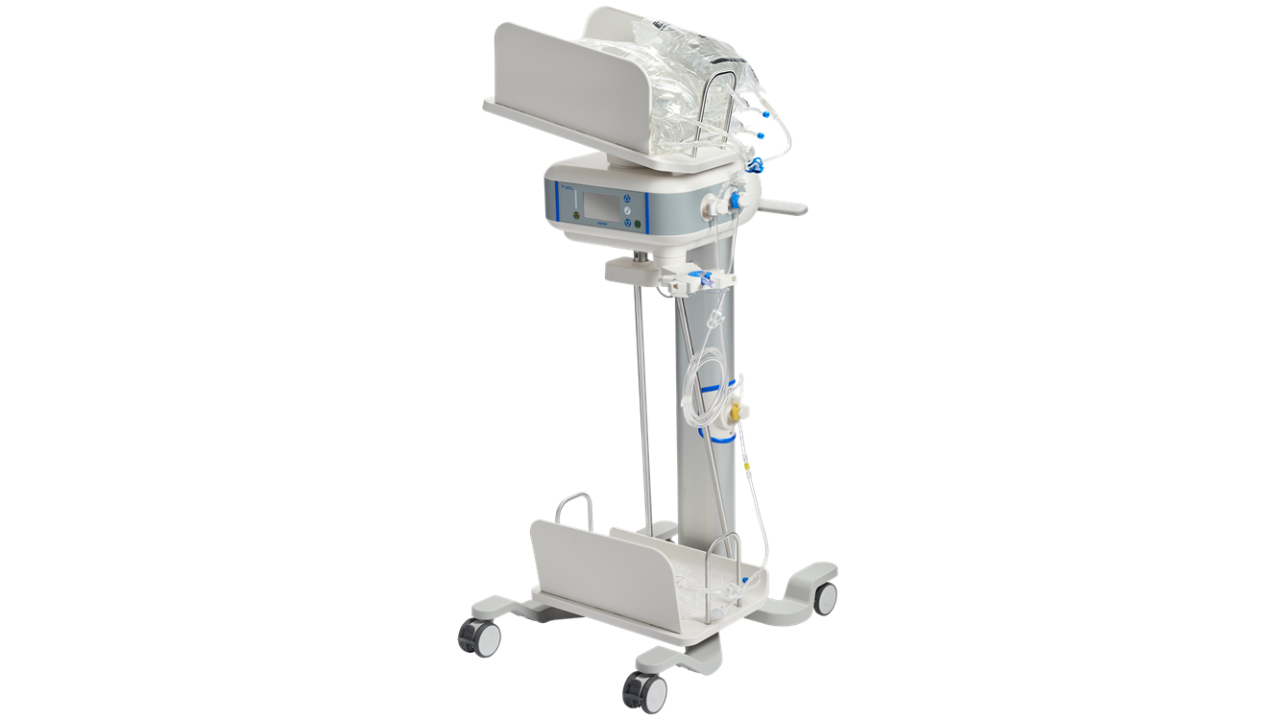
APD is a dialysis treatment that uses a machine (cycler) to automatically fill and drain the abdominal cavity with dialysate fluid, removing waste and excess fluid while the patient sleeps. The cycler manages the volume, filling, dwell time and drainage of the dialysate solutions. The treatment is easily adaptable to match different patient needs.
We make APD accessible, adjustable to individual patients’ needs and reassuring with the:
With sleep•safe harmony each dwell of the APD treatment can be adjusted for:
This personalized approach may support a better fluid balance and clearance, adapted to each patient’s needs, and can help address challenges such as sodium sieving.5,8
Example of PD prescription (for illustrative purposes only)
Bringing benefits of:
SILENCIA supports dwell-by-dwell prescriptions, allowing each dwell to be individually adjusted in terms of time and volume. With the additional support of the Flexpoint technology, treatments can be tailored to each patient's peritoneal membrane and catheter characteristics, supporting the overall treatment efficiency.
Fresenius Medical Care offers holistic solutions for CAPD and APD patients, which includes supporting patients in preparing for PD with training solutions and the set up.

The stay•safe system helps patients with daily self-care CAPD treatment in a simple and convenient way.
* These statements reflect the personal experiences of the patients. The therapies discussed may not be suitable for every patient, and the effects described may vary between individuals. This content is not medical advice and therapeutic decisions must be made in consultation with a treating physician. Please note that travelling abroad with medicines is subject to the laws and regulations of the destination country.
1 Torres R, Flores L, Morales M, et al. A New Cycler for Automated Peritoneal Dialysis to Provide Efficient Dialysis and Improved Sleep Quality. Blood Purif 2023;52:668–675.
2 Chaudhry RI, Golper TA. Automated cyclers used in peritoneal dialysis: technical aspects for the clinician. Med Devices (Auckl) 2015;8:95-102.
3 Roumeliotis A, Roumeliotis S, Leivaditis K, et al. APD or CAPD: one glove does not fit all. Int Urol Nephrol. 2021;53(6):1149-1160.
4 Corbett RW, Beckwith H, Lucisano G, et al. Delivering Person-Centered Peritoneal Dialysis. Clin J Am Soc Nephrol. 2024;19(3):377-384.
5 Fischbach M, Zaloszyc A, Schaefer B, et al. Adapted automated peritoneal dialysis. Adv Perit Dial. 2014;30:94-7.
6 Mongkolrattanakul P, Chienwichai K. Effectiveness of a shared decision-making program in reducing unplanned dialysis in advanced chronic kidney disease: a retrospective cohort study. BMC Nephrol. 2025;26(1):224.
7 Slon-Roblero MF, Sanchez-Alvarez JE, Bajo-Rubio MA. Personalized peritoneal dialysis prescription-beyond clinical or analytical values. Clin KidneyJ. 2024;17(Suppl 1):i44-i5
8 Jaques DA, Davenport A. Characterization of sodium removal to ultrafiltration volume in a peritoneal dialysis outpatient cohort. Clin KidneyJ. 2020;14(3):917-924.
9 Jimenez Martin OM, Perplies S. Comparison of the Acoustic Performance of APD Cyclers: an Important Parameter on Sleep Quality. Poster presented at: EuroPD Meeting 2025 Conference; 2025 Oct 8-10 Valencia, Spain.
10 Jimenez Martin OM, Perplies S, Busink E, Boeger S. Usability profile of the new SILENCIA APD cycler. Poster presented at: ISPD 2024 Congress; 2024 Sep 26-29 Dubai, UAE.
11 Jimenez Martin OM, Perplies S, Busink E, Boeger S. Technical complications assessment ofthe novel SILENCIA APD cycler. Poster presented at: 61st ERA Congress; 2024 May 23-26 Stockholm, Sweden.
12 Ficociello LH, et al. Patients reporting not "sleeping normally" are more likely to transition to in-center hemodialysis within 90 days of peritoneal dialysis start. Nephrol Dial Transplant.2024,39(1):gfae069-0910-1325(Conference abstract)
13 Sloand JA, Marshall MR, Barnard S, et al. Peritoneal Dialysis (PD) Patient and Nurse Preferences around Novel and Standard Automated PD Device Features. Kidney360. 2024;5(3):380-389.
14 Albert A, Richter S, Kalk P, et al. Analysis of a nurse-provided on-call peritoneal dialysis support in an outpatient reference care centre. BMC Nurs. 2024;23(1):144.