

Finding strength in change: George’s journey with dialysis
At 77, George Calverley speaks about his life with a quiet sense of clarity — one shaped not just by years, but by experience. His journey with kidney disease has been long, unfolding gradually over decades, and teaching him lessons about resilience, adaptation, and the importance of human connection.
George’s story began in his 30s, when doctors first identified protein leakage in his kidneys. At the time, the diagnosis didn’t fully register. “I didn’t really understand how serious it was,” he recalls. Like many people in the early stages of chronic kidney disease, the progression felt distant, manageable, even abstract.
Coming to terms with change
It wasn’t until his 60s that George came to understand the severity of his condition. Despite adjustments to his medication and diet, his kidney function continued to decline, and dialysis eventually became the next step in his care; it was a transition that required adaptation both physically and emotionally.
The diagnosis came as a surprise. With no family history and limited familiarity with dialysis, George needed time to process what it would mean for his life. “You don’t think it’s going to happen to you,” he says. “And then suddenly, it’s your reality.”
Looking back, he recognizes that coming to terms with the change was part of the journey, and struggle to accept his diagnosis was an understandable response to a life-altering change.
Fortunately, George had undergone fistula surgery two years before starting dialysis, giving him valuable time to prepare. Even so, by the time treatment became necessary, his health had deteriorated significantly. Severe fluid retention left him breathless and weak. “I was short of breath, couldn’t walk, couldn’t do anything,” he remembers.
What made it more difficult was the disconnect between how he felt inside and how he appeared on the outside. “I didn’t look sick,” George explains, “but I knew something wasn’t right.” That internal awareness, along with the need to adjust to a new routine, became one of the toughest parts of his journey.
Finding stability in care
A turning point came when George found stability in his care.
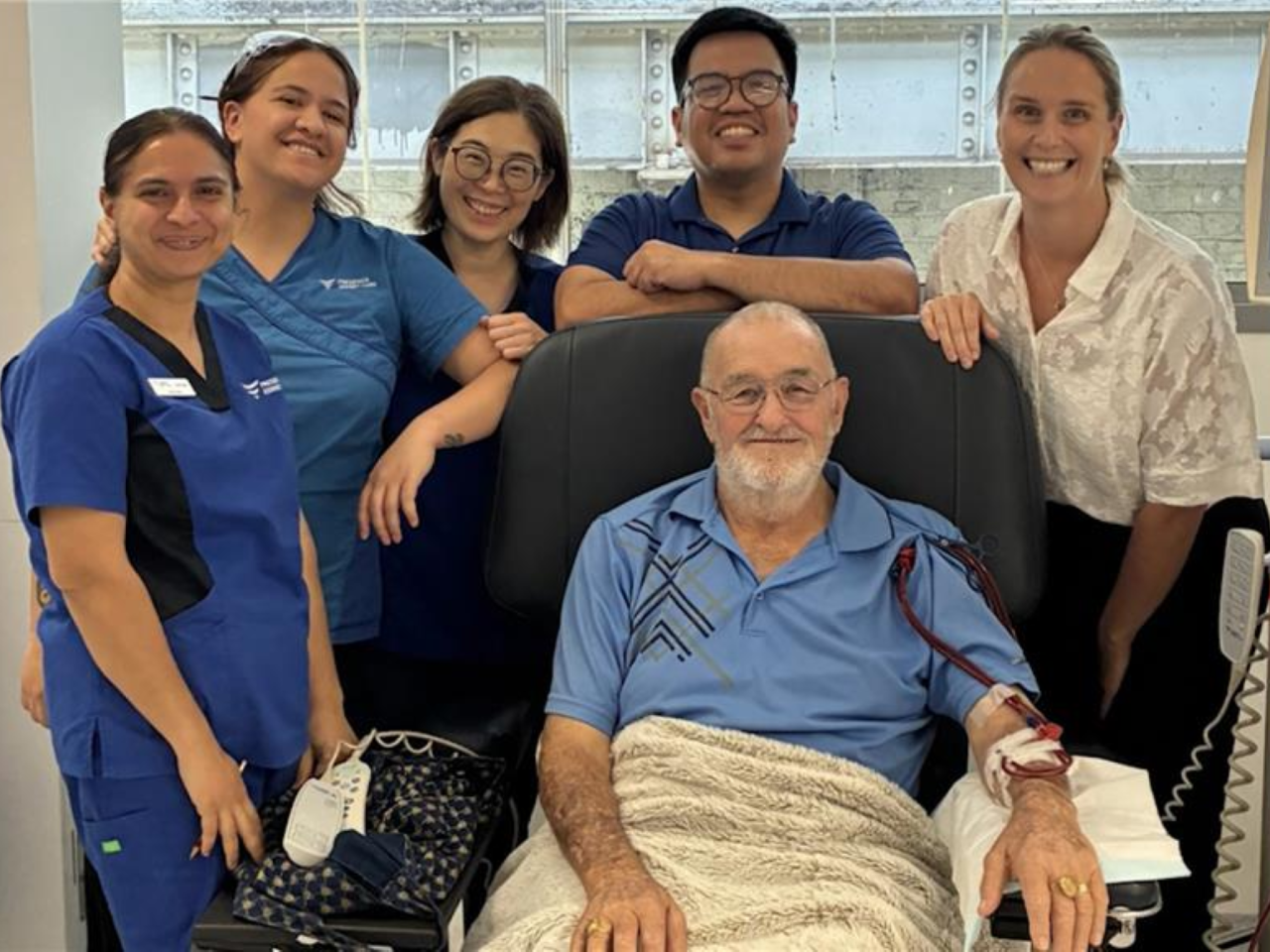
After an initially stressful experience in a hospital setting, he began treatment at Midland Dialysis Clinic in Perth, Western Australia. There, the difference was immediate — not just in clinical care, but in the environment.
“The team here… they’re like a family,” George says. “They’re welcoming, compassionate. That makes a huge difference.”
For George, that sense of connection and support transformed his experience. Dialysis became part of a structured routine, supported by a team he trusted. It highlighted an important truth: While treatment is clinical, the patient experience is deeply personal.
Dialysis has required George to make lifestyle adjustments, including managing fluid intake and diet. Over time, he has adapted to these changes, focusing on what continues to be possible rather than what has changed.
With time, his strength has begun to return. He is gradually resuming parts of his life that are important to him, including travel. Recently, George took a four-day trip to Bali, coordinating a dialysis session while abroad.
It’s a reminder that dialysis, while life-changing, does not have to be life-defining.
Looking ahead with hope
George also looks ahead with quiet determination. He hopes to return to the golf course — an activity he once enjoyed and is eager to take up again as his health improves.
When asked what advice he would give others facing a similar diagnosis, his message is simple and grounded in lived experience.
“It’s a big change, but it doesn’t mean your life stops,” he says. “With the right mindset and the right support, you can keep going. You can still live your life.”
George’s story is about more than managing a chronic condition. It’s about adapting to change, finding strength in community, and redefining what it means to live well on his own terms.
Watch George tell his story below:
Publication date: June 2026